A recent study involving 26,811 Chinese students in grades 7 through 12 sends a clear warning: While homework performance improved after using generative AI, test scores on exams taken without aids declined significantly. Particularly affected were those students whose behavior suggested that they had outsourced a large portion of their thinking to AI.
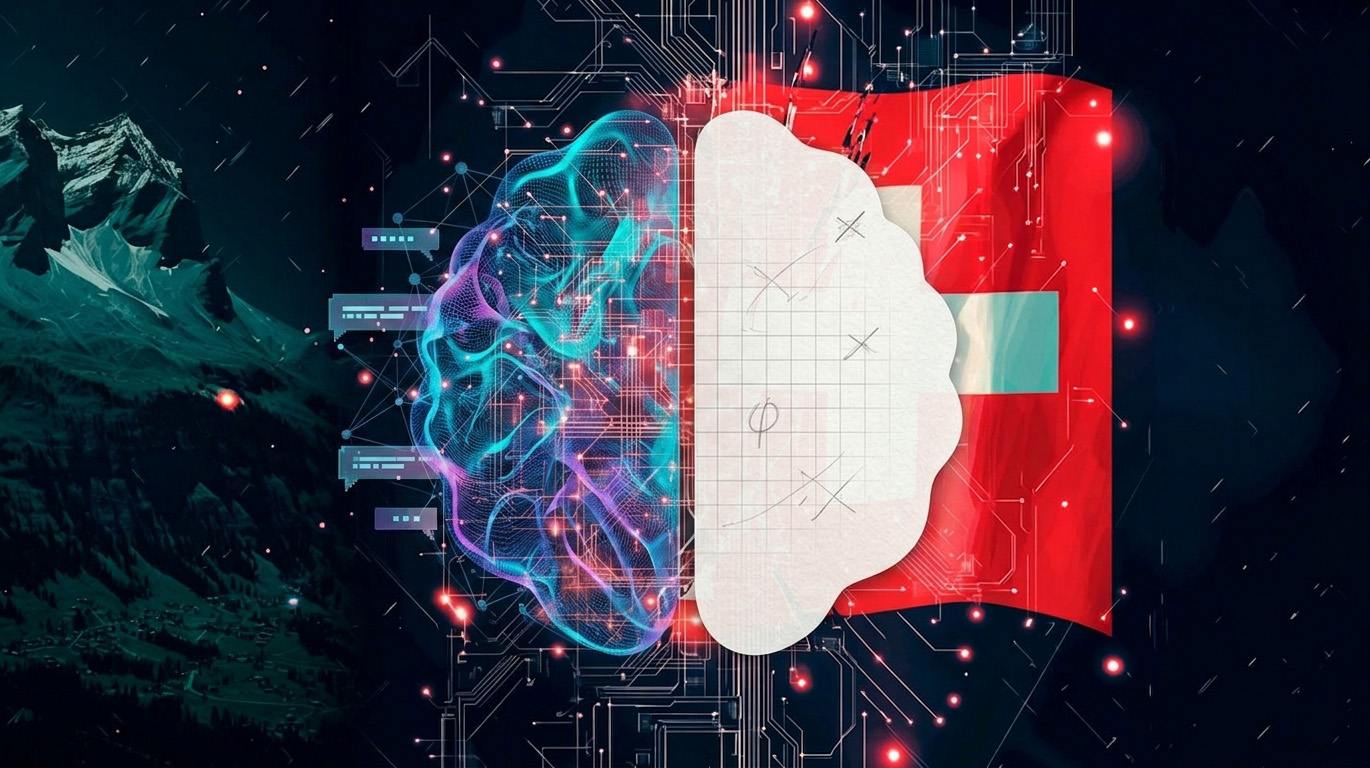
For swissAI, the study is not an argument against artificial intelligence. Rather, it shows that education systems must quickly determine how AI can be used without undermining fundamental skills in thinking, learning, and problem-solving.
Chris Beyeler, President of swissAI, states: “We cannot afford to wait two or three years to realize that we have organized learning, testing, and skills development incorrectly. AI has long since become part of the everyday lives of our children, teenagers, and adults. Now the education system must catch up.”
National Education Dialogue by 2026 swissAI calls on the federal government and the cantons to launch a national education dialogue for the AI era in2026, in collaboration with relevant education stakeholders. This dialogue should include schools and teachers, vocational training institutions, teacher training colleges and universities, the scientific community, and the business sector, as well as existing AI and education initiatives. The aim is not to create a new, parallel structure. Rather, the goal is to pool existing expertise and projects, define common priorities, and implement concrete solutions more quickly.
From swissAI's perspective, there are five key points
1. Further Develop Curricula Curricula must more clearly define which skills people need to master on their own, where AI should provide meaningful support, and where learning should intentionally take place without AI. Foundational knowledge remains essential, because without one’s own knowledge, it is not possible to reliably evaluate the output of AI systems.
2. Rethinking Exams Assessments must once again reliably demonstrate what learners have understood and are able to apply on their own. This may include oral components, documented work processes, and exams with and without AI.
3. Teaching AI Literacy Early On Children and adolescents are already encountering generative AI, synthetic images, and algorithmically generated content. AI literacy must therefore become an age-appropriate part of school education—including source verification, data protection, dealing with deepfakes, critical thinking, and ethical issues.
4. Focus on learning rather than merely using tools AI can support learners, explain content, and provide feedback. At the same time, it must not replace the mental effort that makes learning possible. That is why a closer connection is needed between educational research, pedagogy, schools, and AI practice.
5. Taking a Holistic View of School, Vocational Training, and Continuing Education The changes brought about by AI do not affect only compulsory education. Vocational training, higher education, workplace training, and lifelong learning must also be part of a comprehensive strategy.
Other countries are taking action—Switzerland must follow suit China has already systematically incorporated AI education into its educational planning. Starting in the fall of 2025, primary and secondary schools in Beijing will be required to provide at least eight class hours of basic AI education per school year. This was followed in April 2026 by the national action plan “AI + Education.” swissAI is not calling for this model to be adopted. However, the comparison illustrates the pace at which other countries are responding to this development.
There are already numerous projects and initiatives in Switzerland as well. The Swiss AI Action Plan from digitalswitzerland sets important goals with a focus on “Scaled AI Education and Literacy.” From swissAI’s perspective, it is now crucial to consolidate these approaches and scale them up more quickly.
Studies and Sources
• Strömberg, David; Lei, Victor; Wu, Yanhui (2026): The Generative AI Learning Penalty: Evidence from Chinese Secondary Education, CEPR Discussion Paper DP21577, published on June 2, 2026.
• The Economist: Does AI Prevent Children from Learning?, August 18, 2026.
• Chinese Ministry of Education: Guidelines on AI Education in Primary and Secondary Schools, December 2024.
• Beijing Municipal Education Commission: Basic AI education in elementary and secondary schools starting in the fall of 2025.
• Chinese Ministry of Education and four other ministries: National Action Plan “AI + Education,” April 2026.
• Swiss AI Action Plan by digitalswitzerland, May 2026.
Contact
swissAI – User Association for Artificial Intelligence
Chris Beyeler, President of swissAI
swissAI.ch, chris@swissai.ch, media@swissai.ch, +41 56 560 11 00